| Back to Back Issues Page |
 |
|
The GreenWave Podcast By Synergy International Episode 56 is out! January 20, 2026 |
💚🌊 The GreenWave Podcast By Synergy International 🌊💚 Episode 56 is out and you don't want to miss this one!
The Governance and Economics Behind BiofuelsJoin SYNI, your hostess who keeps on churning out quality content, as she discusses the governance and economics behind biofuels, and what is really behind the sustainable curtain once the slogans are peeled off and the spreadsheets are opened. Happily, we know our podcast listeners are a sophisticated audience who understand that nuance is a part of the real world. Biofuels remain an essential but limited part of decarbonising the hardest sectors in the near to medium term. If you’re looking for a single sentence summary, biofuels can help decarbonise the sectors that need molecules, but they cannot carry the whole transition, and their future depends as much on governance and economics as it does on chemistry. Episode 56Our posts from last week touched on some important topics: Living on Thin Ice More Than Just a Turn of Phrase in QE Islands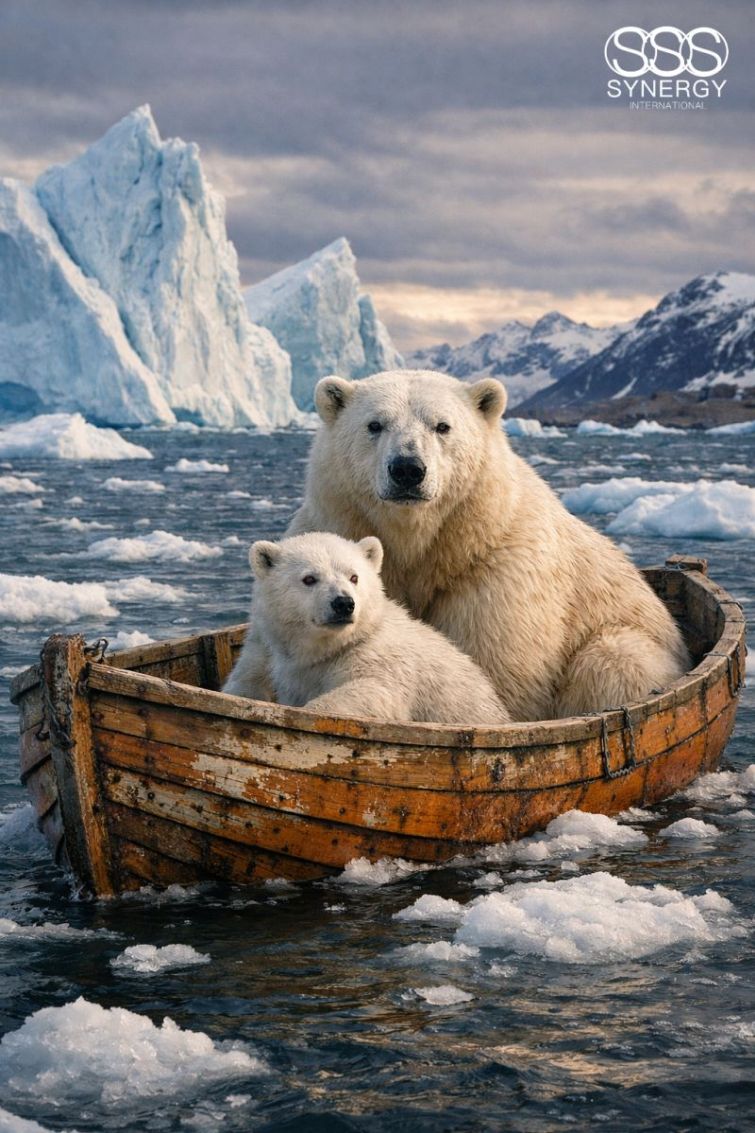
💚 🌊 Living on Thin Ice More Than Just a Turn of Phrase in QE Islands 🌊 💚 The Queen Elizabeth Islands sit at the top of Canada, a maze of fjords that used to be locked shut by the oldest, thickest Arctic sea ice, regarded as the last refuge of polar bears, their best chance to keep afloat amid global warming. Sadly that mother polar bear and her cub depicted in today's graphic might turn out to be metaphorically true in the not-so-distant future. 🧊 In another excellent article, ScienceAdvisor reports that the Coast Guard icebreaker Amundsen pushed through on a first full oceanographic mission and found the ice far easier to navigate than expected. Floes that once felt like concrete were breaking, softer, and surprisingly thin in sheltered channels. 🛰️ This matters because the QEI has been treated as the “last ice area”, a supposed final refuge for multiyear ice and the food webs built around it. Yet the field notes are blunt: conditions are sliding. Satellite analysis suggesting melt in the QEI is starting about five days earlier per decade since 1997, quietly adding extra melt time to every summer. 🌡️ A single year can tip the balance. 2024 was a bad combination: a warm winter left thinner ice going into spring, less incoming ice piled into the archipelago, and autumn freeze up arrived late. When ice loses days at both ends of the season, it loses its margin. In places designed by geography to preserve ice, the calendar now works against it. Read more... EU's EED Creates New Reporting Standards for Data Centre Ops
💚 🌊 EU's EED Creates New Reporting Standards for Data Centre Ops 🌊 💚 European Union data centre rules are moving from “nice to know” into “must report”, and that shift will hit operating models faster than many operators expect. The EU's revised Energy Efficiency Directive (EED) is turning performance disclosure into a compliance routine, with data landing in a European database that regulators, investors, and local planners can all interrogate. ⚡ The metrics sound technical and contribute new members to the vast soup of sustainable acronyms already in existence, yet they translate directly into money. Power Usage Effectiveness (PUE), which measures total facility energy divided by IT equipment energy, signals how much electricity disappears into overhead. Water Usage Effectiveness (WUE), which measures how much water a site uses for cooling per unit of IT energy, puts a price on cooling water in drought prone regions. Energy Reuse Factor (ERF), which measures the share of a site’s total energy that is exported for reuse, and Renewable Energy Factor (REF), which measures the share of a site’s energy that comes from renewable sources, start to expose whether a site behaves like a dead end load or an asset that can return value through energy reuse. 🔖 Once these metrics are standardised, comparisons get brutal. The measurement boundary will matter, and the temptation to game averages will surface, so operators who invest in real telemetry and third party assurance will keep their credibility when the database becomes public as procurement teams screen by default. 🏗️ The EU Commission’s direction of travel points to a bloc-wide rating or label scheme, like a credit rating system. Labels change behaviour because they simplify decisions for non engineers. Decisions around fundamental project development pillars like projects permits, landlords and tenants, grid connection priority and financing risk. Expect procurement teams to bake ratings into Request for Proposal (RFP) and auditors to start asking why a “C” site is still expanding. Read more... The Donald Strikes at Heart of UN's Funding & Carbon Markets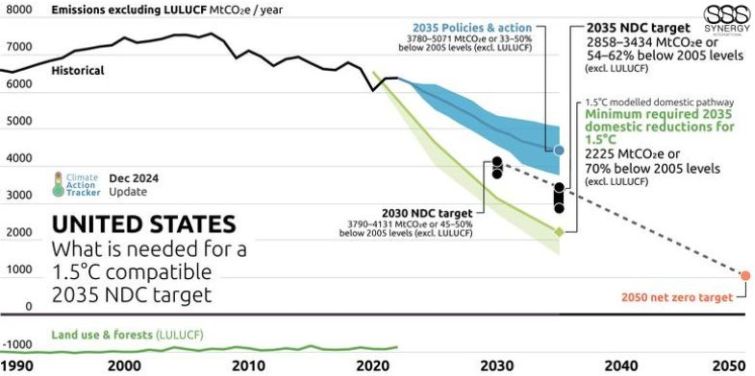
💚 🌊 The Donald Strikes at Heart of UN's Funding & Carbon Markets 🌊💚 It's becoming an accepted fact that we live in a volatile political world. Among our friends and colleagues, the astonishment over political events arrives at pace on a daily basis. Of course at the root of the rot is The Donald, aka President Trump, who has assumed a bullet-proof posture to run rough over much of the existing US political system. 🌀 Yet the bully tactics visible for all to see across multiple flashpoints were first rolled out against the US sustainable energy industry from the beginning of the second Trump Administration. So it was taken as business as usual last week when The Donald signed an executive order suspending US participation across 66 international bodies, including the UN Framework Convention on Climate Change. The UNFCCC is the backbone for national emissions reporting, climate finance coordination, and carbon market rulemaking. 💸 The funding shock is immediate. Since 2014 the US has pledged more than $6 billion to the UN's Green Climate Fund and delivered $2 billion. It also provides about 30% of voluntary contributions to the Intergovernmental Panel on Climate Change, a UN affiliated scientific body that assesses the state of climate science by reviewing published research and producing major assessment reports and guidance that governments use for climate policy, risk planning, and emissions accounting. 📉 Carbon markets are the sharp edge of The Donald's actions. Article 6 of the UN's Paris Agreement from 2015 sets the terms for international carbon trading and corresponding adjustments that prevent project double counting. With the US stepping back, US developers aiming for UN's compliance demand may lose eligibility and get pushed into voluntary carbon markets. Read more... The Latest Sustainability DevelopmentsThe latest LinkedIn newsletter highlights recent news and developments in sustainability.Check it out here. A few of the highlights from last week: Auctions: IRENA pushes “risk allocation” as the missing design lever (11 Jan 2026) IRENA argues renewables auctions have delivered low prices but often shift macro and currency risk onto host states; it proposes auction-design choices that share risks more equitably while supporting project delivery, local value creation, and reduced debt stress. (irena.org) Renewables jobs: growth continues, but the pace slows (11 Jan 2026) IRENA/ILO’s annual review estimates at least 16.6 million renewable-energy jobs globally, while noting moderated growth despite record build-outs—driven by scale efficiencies, automation, manufacturing overcapacity, and grid bottlenecks/curtailment. (irena.org) Climate volatility becomes a power-system planning variable (13 Jan 2026) A WMO–IRENA “Year in Review” highlights how climate extremes are already shifting solar/wind/hydro performance; it notes 2024 ~1.55°C above pre-industrial and a 4% climate-driven increase in global energy demand vs the 1991–2020 average, plus early evidence that seasonal forecasts can anticipate regional anomalies. (irena.org) UPCOMING EVENTS Sustainability Week 2026 (Economist Impact) – Date: March 2–4, 2026 Location: Intercontinental London – The O2, London, United Kingdom (events.economist.com) Climate Week New Orleans 2026 – Date: March 15–22, 2026 Location: New Orleans, Louisiana, USA (Climate Week) Climate Week Hawaii 2026 – Date: March 22–29, 2026 Location: Hawaii, United States (Climate Week) Climate Week Atlanta 2026 – Date: March 29–April 4, 2026 Location: Atlanta, Georgia, USA (Climate Week) ChangeNOW - Date: Mar 30–Apr 1, 2026, Grand Palais, Paris. DC Climate Week 2026 – Date: April 20–26, 2026 Location: Washington, DC, USA (DC Climate Week) Climate Week Zurich 2026 – Date: May 4–9, 2026 Location: Zurich, Switzerland (climateweekzurich.org) Climate Week 2026 (Climate Change & Sustainability Conference) – Date: June 18–19, 2026 Location: London, United Kingdom (climateweek.thepeopleevents.com) 2nd International Conference on Climate Change and Environmental Sustainability – Date: October 8–9, 2026 Location: ART Hotel Narita, Tokyo (Narita, Chiba), Japan (climatechange.c2pforum.com) Greenbuild - Date: Oct 19–22, 2026, Javits Center, New York City. UN 2026 Climate Change Conference (COP31) – Date: November 2026 (exact dates TBC) Location: Host country/city TBC (Australia–Turkey bid under discussion) (esgdive.com) |
| Back to Back Issues Page |