| Back to Back Issues Page |
 |
|
The GreenWave Podcast By Synergy International Episode 55 is out! January 13, 2026 |
💚🌊 The GreenWave Podcast By Synergy International 🌊💚 Episode 55 is out and you don't want to miss this one!
Adaptation Goes Mainstream as Fastest Growing Member of Sustainable FamilyJoin SYNI, your hostess with a bounty of wisdom, for today’s discussion of Adaptation, the fastest growing member of the sustainability family and the one that shows up to the party wearing sensible shoes. Adaptation is the biggest buzz for sustainable development and investment headed into 2026 and sounds simple: it is the deliberate strengthening of people, ecosystems, and infrastructure to reduce harm and maintain function as climate hazards and other environmental stresses intensify and shift. If you work in sustainable energy, Adaptation has quickly become a bigger dial on your risk register, design basis, community value proposition, and market thesis. Clean electrons that stay on during stress events are now the objective of the exercise. Project development that qualifies demands the ability to measure, finance, implement, maintain, and update as hazards evolve. It will be an enterprise based upon continued governance. Episode 55Our posts from last week touched on some important topics: EU Steps into CBAM Operations To Kick Off New Regime in 2026
💚 🌊 EU Steps into CBAM Operations To Kick Off New Regime in 2026 🌊 💚 The transitional era of quarterly reporting is over, and the definitive Carbon Boarder Adjustment Mechanism regime is now the rulebook that customs teams, procurement desks, and CFOs have to live with. The policy intent is clear: align the carbon cost of imports with the EU Emissions Trading System, and push cleaner production choices across supply chains. 🧾 Are there early signs of problems in the first week? Yes, and they show up first as administrative friction. The Commission has been explicit that many importers must have applied for, or received, authorised CBAM declarant status at the time of import, with a late deadline of March 31, 2026. That is a classic recipe for bottlenecks at the worst possible place: border clearance. 🛃 The second stress point is access and workflow. The CBAM registry is effectively gated through national competent authorities, which means onboarding speed varies by member state and by how prepared each importer is with EORI, permissions, and internal controls. The Commission is still publishing operational guidance and reference material as the regime goes live, which tells you the compliance machine is still being tuned in real time. Read more... Adapting to Adaptation Is One of 2026's Key Sustainable Themes💚 🌊 Adapting to Adaptation Is One of 2026's Key Sustainable Themes 🌊 💚 Adaptation is undoubtedly one of the catchwords for Sustainability in 2026, kind of a perceived safe space from failing policy responses in the faltering pursuit of Net Zero CO2 emissions. Adaptation, which basically tries to prepare the world for widespread climate shocks, is being highlighted as a very investable theme in 2026. So we have plenty of signals from important players in the sustainable landscape who are adapting to the money trail. 🌍 McKinsey’s latest adaptation work puts numbers on what “money trail” really means. Today, roughly 40 percent of Earth’s landmass already faces material hazards, including severe heat, wildfire weather, drought, and flooding. Their modeling suggests 1.5°C arrives around 2030 and 2°C around 2050 on current trajectories, so this is planning horizon stuff, not distant sci fi. 🔥 Heat is the headline risk for productivity and basic liveability. Land exposed to heat stress rises about 25% at 1.5°C and more than 50% at 2°C, with already hot regions shifting from about 12 weeks a year of stress conditions to more than 16. Heat waves spread fast too: exposure rises fivefold at 1.5°C, and at 2°C roughly two thirds of global land faces a meaningful likelihood of these events. Read more... CBAM's First Stress Test Grows in the Rolling Hills of Tuscany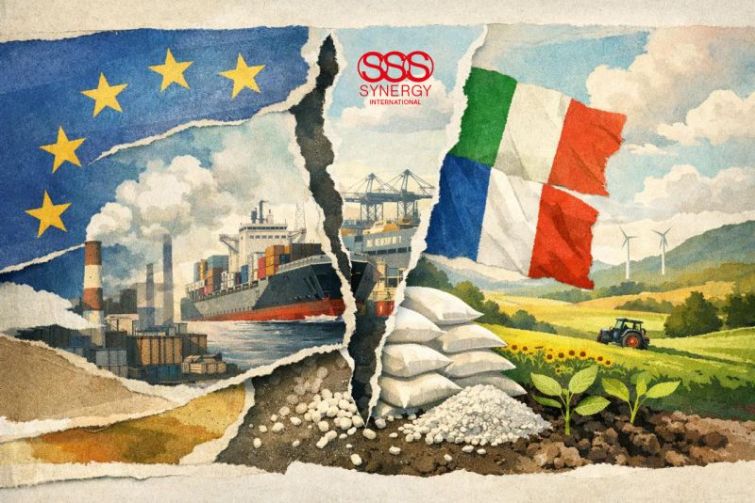
💚 🌊 CBAM's First Stress Test Grows in the Rolling Hills of Tuscany 🌊 💚 The first political flash point for the EU's Carbon Border Adjustment Mechanism arrived immediately in the form of fertilisers. These imports sit at the centre of European yields, farm budgets, and food prices, right where climate policy meets voter reality. 🌱 Italy’s agriculture minister asked the Commission to trigger a suspensive clause and exempt fertiliser imports from CBAM levies, tying the request to farm market strain and the tense EU Mercosur trade debate. France joined with a circulated note urging a temporary exemption or postponement to avoid sharp cost increases as farmers lock in inputs for the 2026 crop year. 🏛️ The timing matters. CBAM effectively imports the EU ETS carbon price into the border, and fertilisers carry high embedded emissions, so the levy can move prices fast. Importers also face new compliance work, including authorisation and full reporting under the definitive regime. Pressure lands hardest when margins are thin and cereal prices are weak, and that pressure shows up quickly in Council rooms. The Latest Sustainability DevelopmentsThe latest LinkedIn newsletter highlights recent news and developments in sustainability.Check it out here. A few of the highlights from last week: UNFCCC: Dominican Republic files its 2024 Biennial Transparency Report (BTR) + NC4 On 5 January 2026, UNFCCC published the Dominican Republic’s 2024 Biennial Transparency Report (BTR1) and, packaged alongside it, the country’s National Communication: NC4. The UNFCCC record shows a submission date of 30 Dec 2025 and publication on 5 Jan 2026, with the documents available as a Spanish PDF. (unfccc.int) In practical terms, this is a Paris Agreement transparency milestone. A first BTR is where a country consolidates, in a standardized structure, the core “how we’re doing” evidence base, typically including: A greenhouse gas inventory reporting package (often supported by a separate inventory document). (unfccc.int) Progress tracking toward the NDC, including implemented policies/measures and their effects (where data allows). (unfccc.int) Adaptation information (priorities, impacts, responses) and Support information (needs and, where applicable, support received/provided). IRENA: Off-grid renewables highlighted as an SDG accelerator, not just “energy access”. IRENA’s 5 January 2026 update (“Off-grid Renewables’ Role is Beyond Closing the Energy Access Gap”) argues that decentralised renewables (mini-grids and stand-alone solar, etc.) should be treated as productive infrastructure, not just charity electrification. It highlights that global off-grid renewable capacity reached 11.1 GW at end-2024, connecting 86 million people, with Africa accounting for more than three-quarters of beneficiaries. The key point is SDG leverage: off-grid power enables irrigation, clinics, schools, lighting, communications, and small enterprise, directly linking energy access to jobs and local value creation (SDG8) and reinforcing water, education, and gender outcomes (SDGs 6, 4, 5). UPCOMING EVENTS World Future Energy Summit - Date: Jan 13–15, 2026, ADNEC Centre, Abu Dhabi. Sustainability Week 2026 (Economist Impact) – Date: March 2–4, 2026 Location: Intercontinental London – The O2, London, United Kingdom (events.economist.com) Climate Week New Orleans 2026 – Date: March 15–22, 2026 Location: New Orleans, Louisiana, USA (Climate Week) Climate Week Hawaii 2026 – Date: March 22–29, 2026 Location: Hawaii, United States (Climate Week) Climate Week Atlanta 2026 – Date: March 29–April 4, 2026 Location: Atlanta, Georgia, USA (Climate Week) ChangeNOW - Date: Mar 30–Apr 1, 2026, Grand Palais, Paris. DC Climate Week 2026 – Date: April 20–26, 2026 Location: Washington, DC, USA (DC Climate Week) Climate Week Zurich 2026 – Date: May 4–9, 2026 Location: Zurich, Switzerland (climateweekzurich.org) Climate Week 2026 (Climate Change & Sustainability Conference) – Date: June 18–19, 2026 Location: London, United Kingdom (climateweek.thepeopleevents.com) 2nd International Conference on Climate Change and Environmental Sustainability – Date: October 8–9, 2026 Location: ART Hotel Narita, Tokyo (Narita, Chiba), Japan (climatechange.c2pforum.com) Greenbuild - Date: Oct 19–22, 2026, Javits Center, New York City. UN 2026 Climate Change Conference (COP31) – Date: November 2026 (exact dates TBC) Location: Host country/city TBC (Australia–Turkey bid under discussion) (esgdive.com) |
| Back to Back Issues Page |